

My faith is a big part of who I am. I was raised in the church—my dad was a pastor—and for a long time, I didn’t question what I believed. But eventually I started asking harder questions—not so much about God, but about the church, Christian culture, and how much of my belief system was shaped by tradition rather than Scripture.
That season led me to a deeper, more curious kind of faith. I started paying closer attention to the context of what I was reading in the Bible. I didn’t lose my faith—I found it, but with more humility and a whole lot less certainty (permission to ask questions and acknowledge that I might not have it all figured out).
One thing I’ve been reflecting on a lot lately is this:
Jesus didn’t try to overthrow the government.
He didn’t try to force the Roman Empire to legislate morality. He didn’t stage protests to demand that nonbelievers behave more like believers. He simply lived differently. He loved people in a way that stood out. He fed the hungry, touched the sick, welcomed the outcast. He modeled a way of living that was upside-down in the best possible way.
He called us to do the same:
To be salt and light (Matthew 5:13–16).
To love our neighbors (Luke 10:27).
To walk humbly, act justly, and love mercy (Micah 6:8).
And yet, it seems like lately here in the U.S., as Christians we are more focused on winning political battles than living like Jesus.
That’s something I’ve been wrestling with again in light of recent legislation—specifically the so-called “Big Beautiful Bill.” When I first read about it, I felt a tangle of emotions. There are parts of it that concern me, particularly how changes to funding and access to resources might impact people in vulnerable situations – “the least of these”. I found myself frustrated. Upset. Wishing that leaders in power would make more compassionate choices. And, if I’m being honest, judging others Christians who didn’t seem to care about it.
But then, I starting thinking:
What if I’m expecting the government to do what Jesus asked me to do?
That’s not to say I should ignore what’s happening politically, or stop caring about policy. But I have to remember that my calling as a follower of Christ isn’t contingent on laws or leadership.
It’s personal.
It’s local.
It’s lived.
If people are struggling with access to food or healthcare or support, maybe the question isn’t just, Why won’t the government help? Maybe the question is also, How can I help?
Jesus didn’t tell Rome to fix poverty.
He told us to feed the hungry (Matthew 25:35).
He didn’t delegate care for the foreigner.
He reminded us that we were foreigners once, too (Deuteronomy 10:19).
He didn’t call for power.
He called for love.
This shift in perspective has been humbling—and freeing. I don’t have to wait for laws to reflect my values. I can live them now. I can show up for people with compassion, generosity, and kindness. I can embody the truth I believe in, no matter what’s happening on Capitol Hill.
So, no, I don’t love every part of the bill.
But maybe this is an opportunity—not for outrage, but for action.
Maybe it’s a chance for Christians to actually be the Church.
What if it’s our invitation to show up for the poor, to care for immigrants, to be radically generous, kind, and compassionate—not because a law tells us to, but because Jesus did?
I’m not saying we stop advocating for justice.
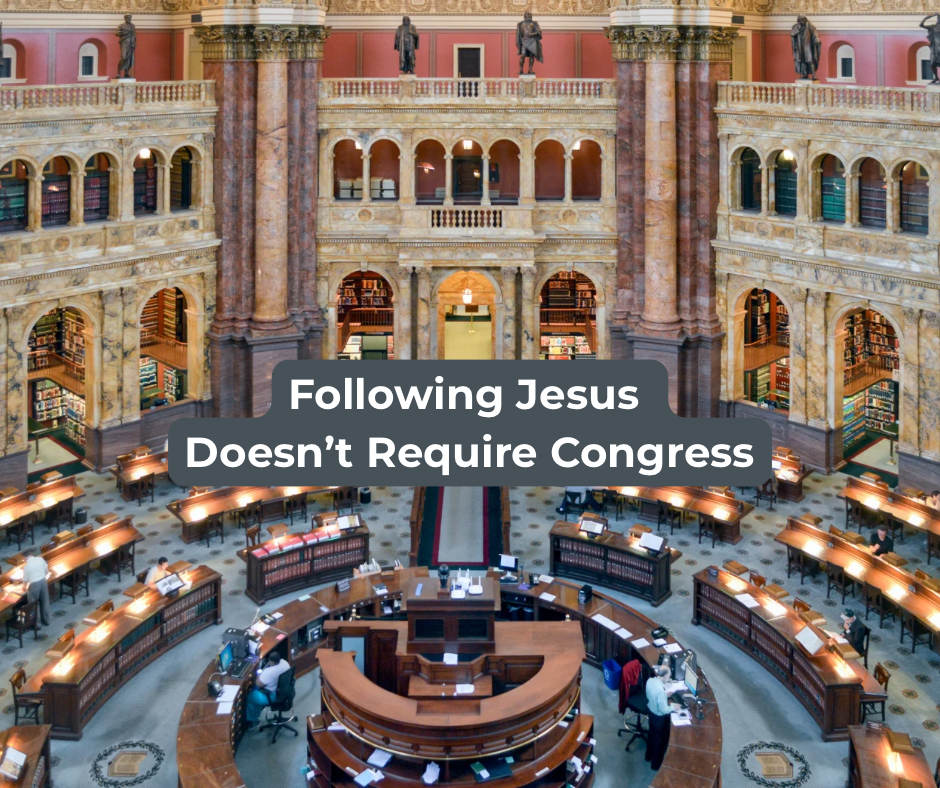
But I am saying this: if we want the world to change, screaming at Congress won’t get us there.
Following Jesus might.
“The Lord defends the cause of the fatherless and the widow, and loves the foreigner residing among you, giving them food and clothing. And you are to love those who are foreigners, for you yourselves were foreigners in Egypt.” Deuteronomy 10:18-19
 Richelle Hofer
Leave a comment